Data abstraction vs data extraction: meanings, differences and a lease example
For lease, contract and records teams: what data abstraction means in business, healthcare and computer science, how it differs from data extraction, and how extraction feeds an abstract.

Key takeaways
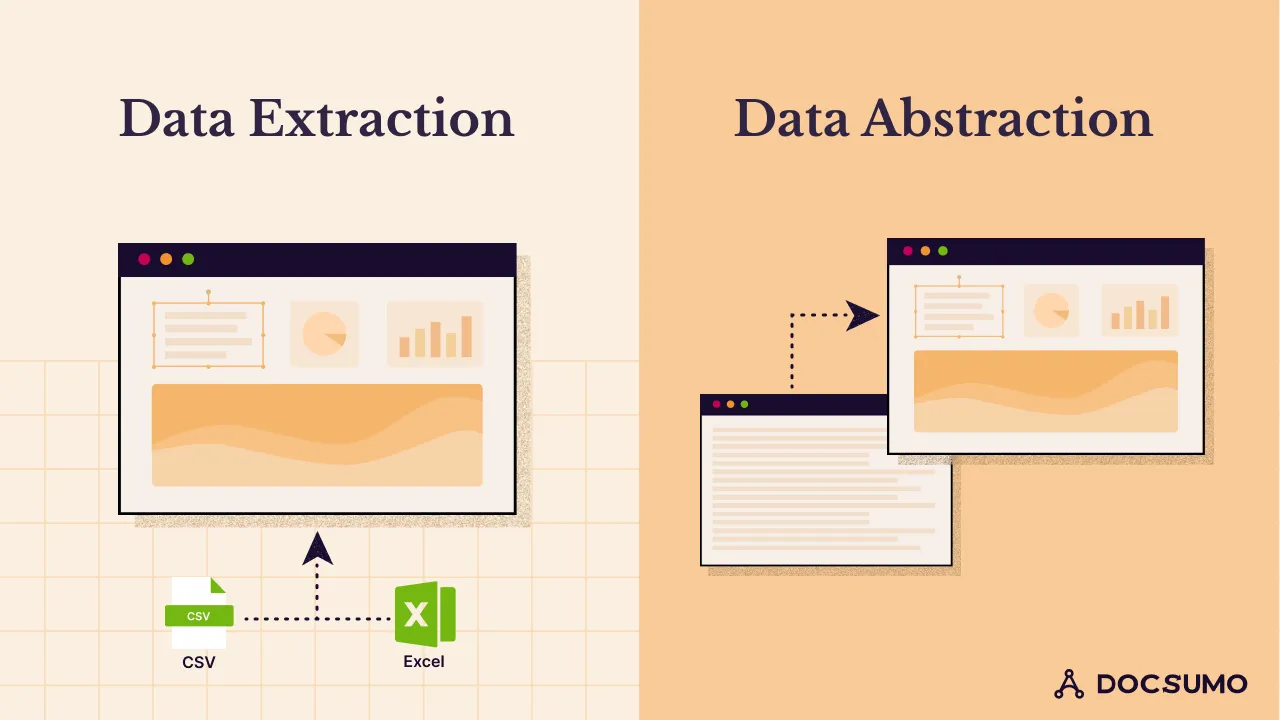
- Data extraction copies exact values out of a document, such as the rent in a lease's rent clause. Data abstraction condenses a long document or record into a short, standard summary of the facts that matter, such as a lease abstract.
- Abstraction includes extraction, plus judgment: which clause governs, what a later amendment changed, and what to leave out.
- In healthcare, clinical data abstraction means capturing key administrative and clinical data elements from medical records for quality reporting, patient registries and research.
- In computer science, data abstraction means hiding how data is stored or implemented behind a simpler view. Databases describe it in three levels: physical, logical and view.
- Software can extract the values and draft the abstract, each value tied to its source; a person confirms the terms that matter.
On this page
Data abstraction vs data extraction is summarizing versus copying. Data extraction pulls exact values out of a document, such as the base rent in a lease, while data abstraction reads the whole document, or a set of them, and condenses the facts that matter into a short, standard summary, such as a lease abstract or a patient registry record. In computer science, data abstraction means something else: hiding how data is stored behind a simpler view.
This guide covers what data abstraction means in each field, how it differs from extraction, and how extraction feeds an abstract, using a lease as the example.
What is data abstraction?#
Data abstraction reduces something detailed to the parts that matter. What that looks like depends on where you meet the term:
In business documents
Reading a long lease, loan agreement or contract and recording its key terms (parties, dates, amounts, options and obligations) in a standard summary called an abstract. Lease abstraction is a common example.In healthcare
Clinical data abstraction: identifying and capturing key administrative and clinical data elements from medical records, for quality reporting, patient registries and research. Coders, nurses and cancer registrars often do it.In computer science
Hiding how data is stored or implemented and showing only what users or other code need. A database separates how data is physically stored from the tables it holds and the views each user sees.
The first two are the meanings people contrast with data extraction. The computer science meaning is about software design, not documents; its three levels are in the FAQ below.
Data abstraction vs data extraction: the difference#
| Aspect | Data extraction | Data abstraction |
|---|---|---|
| What it produces | Exact values, as fields | A short summary of the key facts across the whole file |
| Question it answers | What does the document say here? | What's in force, and what matters to us? |
| Judgment | Low: find the value and copy it | High: apply amendments, resolve conflicts, leave out what doesn't matter |
| Who does it | Software, with a person checking unsure values | Lease administrators, paralegals and clinical abstractors, with software drafting more of it |
| Lease example | Year 1 base rent: $28.00 per sq ft a year (Lease §4.1, page 7) | Base rent: $32.00 per sq ft a year from May 1, 2026, set by Amendment 2, which replaced §4.1 |
Abstraction usually starts with extraction: you can't summarize a lease's rent terms without first pulling the rent schedule. What abstraction adds is reading across documents and deciding what's in force. The abstract below comes from a lease and two amendments, and each field cites the clause and page it came from:
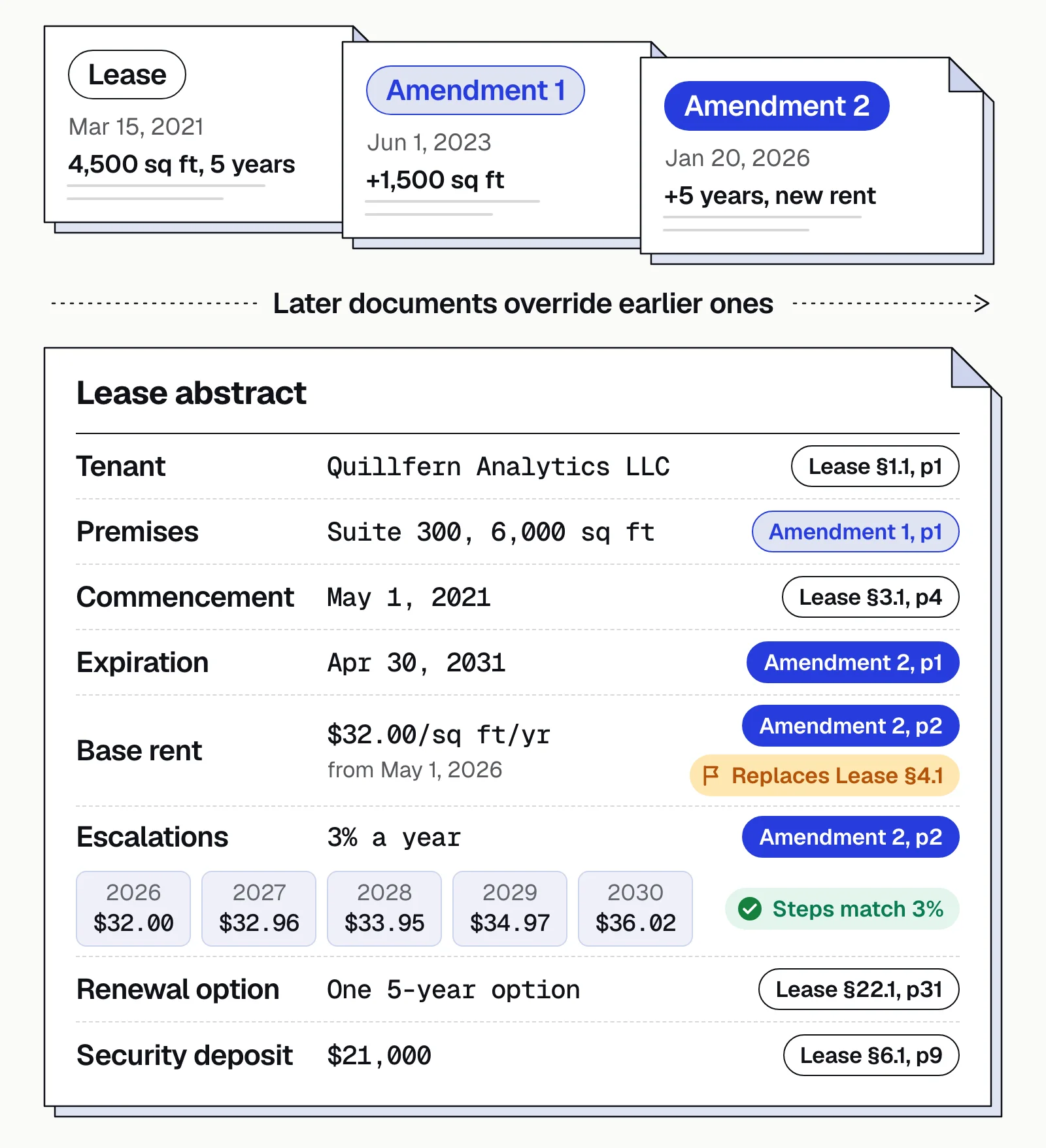
Square footage, term and rent all come from the amendments, so an abstract built from the original lease alone would get them wrong.
How extraction feeds an abstract: a lease example#
A lease abstract is built in the same order whether a person or software does the reading:
- Lease
- Amendments
- Side letters
- Commencement memo
- 01Extract each term with its clause and page
- 02Order the documents by date
- 03Apply each amendment
- 04Assemble the abstract
- 05Review flagged values
Extraction is the step software does fastest and most consistently. Applying amendments and deciding what matters is where the abstractor's judgment comes in, so the useful split is software drafting and people confirming.
Docsumo's lease abstraction software reads leases, amendments and side letters in any layout, handwritten riders included: its pre-trained models cover 250+ document types, and it isn't limited to them. Values it's unsure about go to your reviewer with the source line highlighted, and results reach your lease or accounting system through the API and webhooks, or download to Excel. For property loans, CRE underwriting checks each lease against the rent roll on the Enterprise plan. Docsumo is software, not an outsourced abstraction service.
The bottom line#
Extraction copies what a document says; abstraction decides what's in force and what matters. Most abstracts start with extraction, so automating it, with every value tied to its source, leaves abstractors the judgment calls.
Book a demo with a few of your own leases, or start a free trial.
Frequently asked questions#
What is data abstraction?
It depends on the field. In business and healthcare, data abstraction is reading a long document or record and capturing its key facts in a standard summary, such as a lease abstract or a registry record. In computer science, it means hiding the details of how data is stored or implemented and showing only what users or other code need.
What is the difference between abstraction and extraction?
Extraction copies specific values exactly as they appear. Abstraction summarizes a whole document, or a set of them, into its key facts, which takes judgment: deciding which terms matter, which clause governs and what later documents changed. It's the same split as in everyday English, where to extract is to take something out and an abstract is a summary.
What are the three levels of data abstraction?
In database systems, the physical level describes how the data is actually stored, the logical level describes what data the database holds and how it relates, and the view level shows only the part of the database a given user needs.
What is data abstraction in healthcare?
Clinical data abstraction is the process of identifying and capturing key administrative and clinical data elements from medical records. Hospitals use it for quality reporting to bodies such as CMS and The Joint Commission, for patient registries such as trauma, stroke and cancer registries, and for research.
Can data abstraction be automated?
Partly. Software can extract the values, tie each one to its source and draft the abstract. Because abstraction involves judgment, such as applying amendments or reading an unusual clause, a person should confirm the terms that matter. See lease abstraction.