RPA in mortgage lending: use cases, limits and how it works with document AI
For mortgage and lending operations leaders: which loan processing tasks suit RPA bots, where bots break on documents, and how to pair them with document AI.

Key takeaways
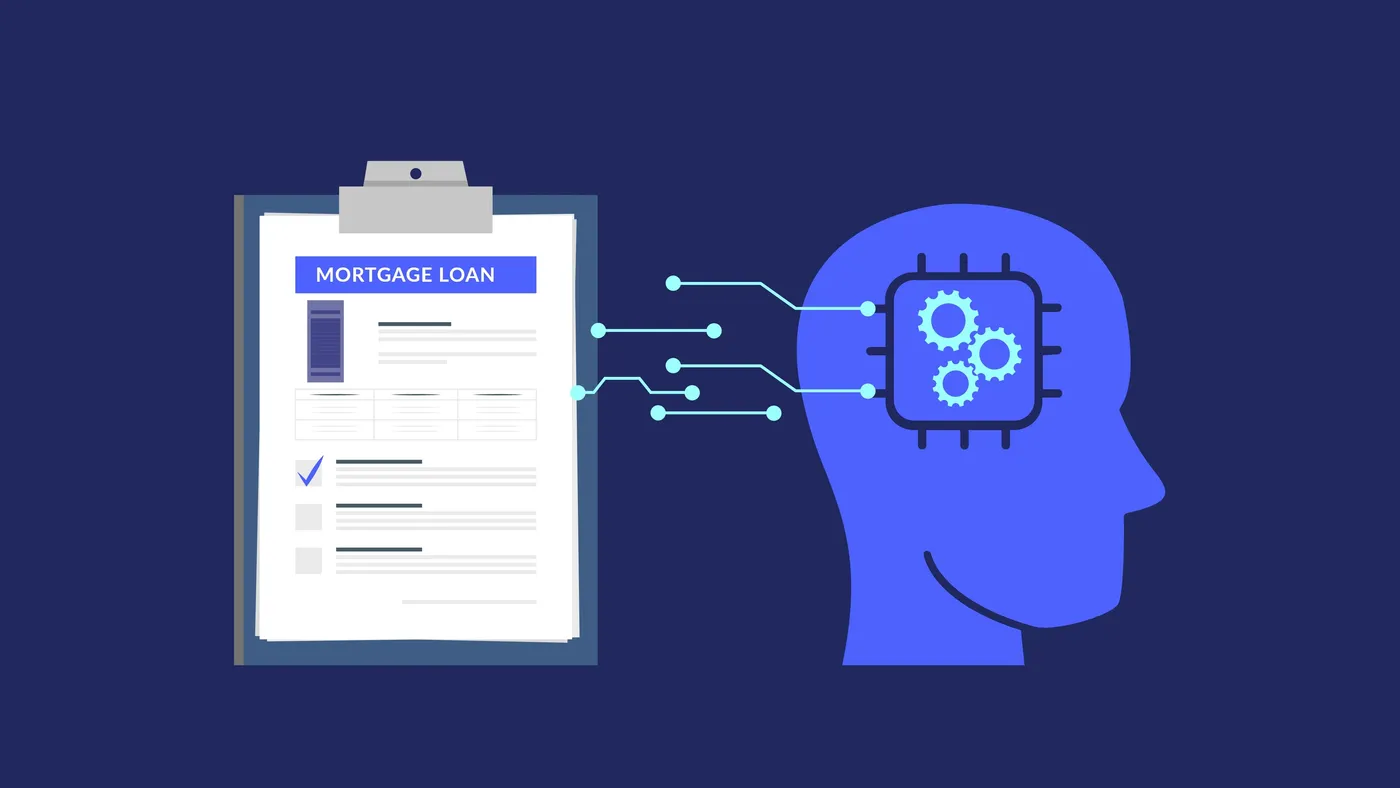
- Robotic process automation (RPA) in mortgage lending uses software bots to repeat the clicks and keystrokes loan staff make between systems, such as the loan origination system (LOS), vendor portals and email.
- RPA fits high-volume, rule-based steps on stable screens: LOS data entry from structured data, status updates, disclosure tracking, vendor orders and QC file pulls.
- Bots can't read varied documents such as pay stubs, bank statements and tax returns, so lenders put intelligent document processing (IDP) in front of them: IDP reads and checks the file, then an API or a bot posts the data to the LOS.
- Loan production is expensive: independent mortgage banks and bank mortgage subsidiaries spent $10,936 per loan in the second quarter of 2026, according to the Mortgage Bankers Association.
- Start with one document set, route exceptions to people and measure hours per loan before and after.
On this page
Robotic process automation (RPA) in mortgage lending uses software bots to repeat the clicks and keystrokes loan staff make between systems: keying data into the loan origination system (LOS), updating loan status, ordering services and pulling files for quality control. Bots follow fixed rules, so they can't read documents whose layout changes from one employer, bank or scan to the next, such as pay stubs, bank statements and tax returns. That's why lenders pair RPA with intelligent document processing (IDP), which reads and checks the documents before a bot touches the LOS.
Where RPA fits in mortgage and lending#
RPA suits steps that are high-volume, rule-based and run on stable screens. The same goes for consumer and small business lending, where bots move application data between the LOS, the core banking system and vendor portals. That screen work is part of what a loan costs to make: independent mortgage banks and bank mortgage subsidiaries spent $10,936 per loan on production in the second quarter of 2026, according to the Mortgage Bankers Association.
LOS data entry
Copies structured data, such as a submitted application or fields already extracted from documents, into the LOS.Status updates
Moves loans between milestones and emails borrowers and loan officers when a condition clears.Disclosures
Tracks application dates and triggers disclosure orders, so the Loan Estimate goes out within 3 business days of the application.Vendor orders
Orders appraisals, credit reports, flood certificates and verifications from vendor portals and attaches the results to the file.QC file pulls
Pulls the sample of closed loans for quality control and gathers the documents reviewers need.
RPA vs document AI in mortgage processing#
A bot works on the screens and fields it was shown. A loan file is the opposite: documents from different employers, banks and agencies, often scanned or photographed.
RPA bots
- Follow a recorded script, click by click
- Need data in fixed places: a form field, a spreadsheet cell, a known screen
- Stop, or key the wrong value, when a layout or screen changes
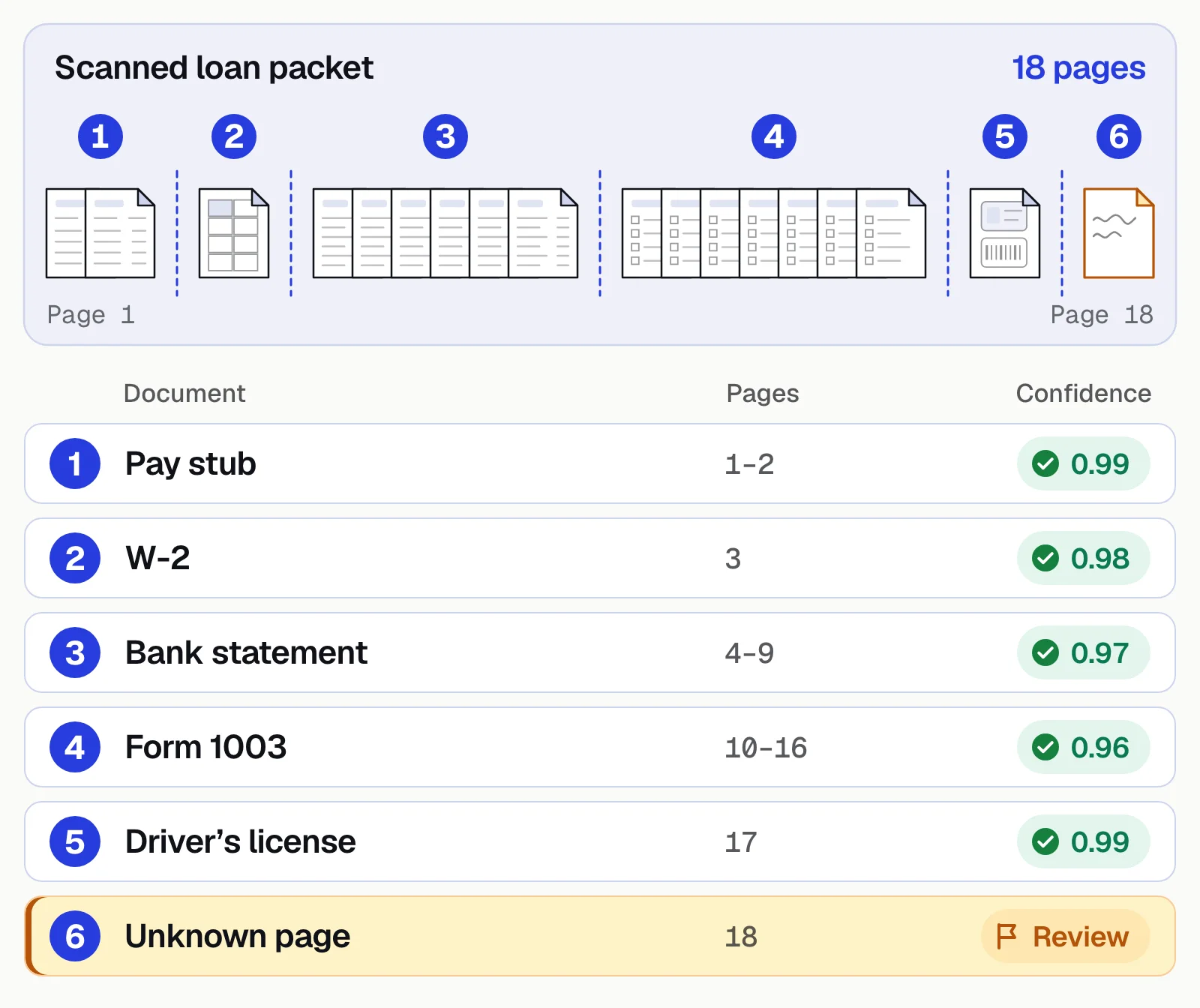
- Can't tell a pay stub from a W-2 inside a scanned packet
Document AI (IDP)
- Reads documents in varied layouts, scans and phone photos included
- Splits a loan packet into its documents and extracts each field
- Checks values against the application and the rest of the file
- Sends uncertain fields to a person before anything reaches the LOS
The line is blurring: UiPath and Automation Anywhere now sell document processing modules (UiPath IXP, Automation Anywhere Document Automation) that feed their bots and AI agents. The split of work stays the same. Something reads the document, then something moves the data.
How RPA and document AI work together#
- Loan package
- Borrower uploads
- Emailed documents
- 01Split the packet
- 02Extract and check
- 03Review exceptions
- 04Bot updates the LOS
IDP reads the file and people review what the model isn't sure about. The checked data then moves through the LOS's API where there is one, or through a bot where there isn't, and the bot can also update the loan's status and conditions. Mortgage document processing walks through the whole workflow.
Docsumo is an intelligent document processing (IDP) platform. For mortgage income verification and the rest of the loan file, it reads pay stubs, W-2s, bank statements and tax returns, including handwritten text, sends fields it's unsure about to your reviewers and delivers the data through API and webhooks, for an integration or a bot to post to the LOS. Classifying and splitting packets is on the Business plan, and cross-document validation is on the Enterprise plan. It isn't an RPA tool or an LOS, and it doesn't produce Form 1084 or Form 91 income calculations.
- 99%field-level accuracy across 250+ document types
- 95%+of documents processed straight through, without manual review
- <5 minper document, down from 2+ hours
How to get started with RPA in mortgage#
- Map the manual clicksWatch processors for a week and list every copy-paste, status update and portal login, with how often each happens.
- Start with one document setPick one high-volume set, such as pay stubs and W-2s, and automate reading it before you automate keying it.
- Add exception routingDecide who sees an uncertain field, a failed check or a stopped bot, and how fast they must act.
- MeasureTrack hours per loan, the share of files no one touches and days from application to closing, before and after.
To size the document side, put in your own volumes:
Hours and budget automation frees up
What automating document data entry saves your team, and the most the software can cost before it stops paying for itself.
- Hours per month today
- Hours per month with automation
- Labor saved per month: your break-even software budget
- Labor saved per year
How it's worked out
- Hours today are documents times minutes by hand. With automation, only the documents that don't go straight through take a person's time, at the review minutes you set.
- Labor saved is the hours saved times the hourly cost. Software that costs less than that a month pays for itself on labor alone.
- It leaves out setup time and the value of faster turnaround.
The bottom line#
RPA is good at moving structured data between mortgage systems and poor at reading documents. Use document AI to read and check the loan file, APIs wherever the LOS has them, bots for the screens that don't, and people for the exceptions. For tools that read loan files, see the best mortgage document automation software.
Book a demo with a few of your own loan files, or start a free trial.
Frequently asked questions#
What is RPA in mortgage?
RPA in mortgage lending is the use of software bots to do repetitive, rule-based steps in loan processing, such as copying data into the LOS, sending status updates, ordering appraisals and credit reports, and pulling files for quality control. Bots work through the same screens a person uses, without changing the systems behind them.
How is RPA used in loan processing?
In mortgage, consumer and small business lending, bots move data between the application, the LOS, the core banking system and vendor portals, and they update statuses, create tasks and pull reports. Reading the borrower's documents is a separate step, done by a person or by document AI.
What is the difference between RPA and IDP?
RPA follows fixed steps in applications. Intelligent document processing (IDP) reads documents such as pay stubs, bank statements and tax returns and turns them into checked data. RPA needs structured inputs, and IDP provides them. See what intelligent document processing is.
Where does RPA give the fastest ROI in mortgage processing?
In high-volume steps with structured inputs and stable screens: status updates, vendor orders, QC file pulls and keying data that's already structured. Steps that start with a document only pay off once the document is read reliably, which is where IDP comes in.
Does RPA use AI?
Classic RPA doesn't: it follows scripted rules and doesn't understand content. RPA vendors now sell AI modules alongside their bots, such as UiPath IXP and Automation Anywhere Document Automation for reading documents, but the bot itself still needs clean, structured data.
What is the 3-7-3 rule for a mortgage?
It's shorthand for TRID disclosure timing under 12 CFR 1026.19: the Loan Estimate goes out no later than 3 business days after the application and 7 business days before consummation, and the borrower must receive the Closing Disclosure at least 3 business days before consummation. Consummation is when the borrower becomes contractually obligated on the loan. Tracking these dates is a common job for bots and workflow rules.
Sources
- Mortgage Bankers Association (MBA NewsLink): IMBs' production profits increase in second quarter of 2026 (August 2026)
- Mortgage Bankers Association: IMBs production profits increase in second quarter of 2026 (press release, August 18, 2026)
- eCFR: 12 CFR 1026.19, disclosure timing for mortgage transactions
- eCFR: 12 CFR 1026.2(a)(13), definition of consummation
- UiPath: IXP and Document Understanding
- Automation Anywhere: Document Automation
First published . Last updated .